

The Consistency Trap: Why You Need to Take a Break
Week three of track beast training and I'm starting to get tired. It's those damn apps I tell ya.

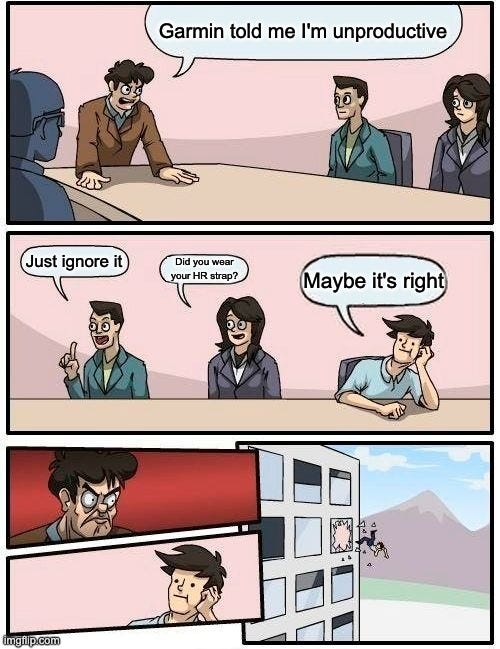
I'm an endurance athlete, so I know how important consistency is to training and performance. But I also know it's easy to fall into the "consistency trap" where you struggle to take a step back and recover, fearing losing consistency.
This week was one of those weeks for me. Everything felt a little harder than usual, and I wasn't bouncing back as quickly from workouts. I know I need to dial back my training this week, but I also felt guilty about "wasting" a week of training.
Don’t let tech tell you how fit you are.
Over the past few years, I've noticed a trend where people are falling into the consistency trap because of what their device or app is telling them. If our watch tells us we're "unproductive," it can feel like the biggest insult. As a keen member of the hyper-productive community of endurance athletes, I know that our GPS device is the one thing we rely on to record our incredible work ethic, so when it throws you some judgment, it hurts.
From my experience, everyone chooses to laugh off the negative recommendations and feedback but pays keen attention to anything that has a loose correlation to "fitness." Whether it's Strava's fitness score, weekly mileage, predicted VO2max, or Garmin's new "Endurance Score." Everyone considers these as simple calculations. More = better. Which is how those calculations work.
Unfortunately, none of these "fitness" determining calculations account for recovery. They all assume that recovery is constant, so the more training you do consistently without a break, the more your "fitness" number will go up. Take a week off, and your numbers will go down (booo 👎), confirming your internal beliefs that you're becoming a fat lazy, unfit normo because you did one less run and slept in on Wednesday.
As a coach and sports scientist, I monitor one incredibly important metric in every athlete to determine training status: performance. If you're improving in the areas we're trying to improve. Training is working. If you're repetitively falling short in training and racing, we must revise the stress, rest, and adapt equation. Sure, there are plenty more metrics we can look at, but at the fundamental level, performing on race day is the end goal.
So next time you feel guilty about taking a break, remember it's not "wasting" time. It's about giving your body a chance to rest and recover so that you can return stronger than ever.
Here is a tip for taking a break without feeling guilty: Plan your breaks.
I’ve always responded well to 2-3 weeks on and one week ‘off’. I implement the same training cycle in my coaching and training plans. You don’t need a whole week off, ew, could you imagine 😧? You just need to dial back the intensity, duration or both. I.e. increase recovery time. Give it a try.
We had super shit weather this week, so both my MTB and running cross-country races were cancelled. I tried to do a 10km effort on Sunday but pulled the pin after 7.5km because I couldn’t be bothered. Hence I need to reaffirm to myself that resting is ok!
📊10:25hrs total (TSS 604)
🏃5x Run = 7:hrs (90km), 934m 📈
🚲2x Zwift rides
🚵1x MTB
Mon - Rest day
Tues - AM Easy hour 13km | PM Zwift General Ride (50min)
Wed - AM easy 30min (7km) | PM Zwift workout 1.5hr
Thurs - Long off-road run 2hrs (25km)
Fri - 90min(17km)
Sat - Easy 60min with strides (13km)
Sun - AM hour run w/ 7.5km @ 3:30min/km | PM 60min MTB
You can follow all my training on Strava!
Subscribe to get my weekly updates straight to your mailbox!


